Overview
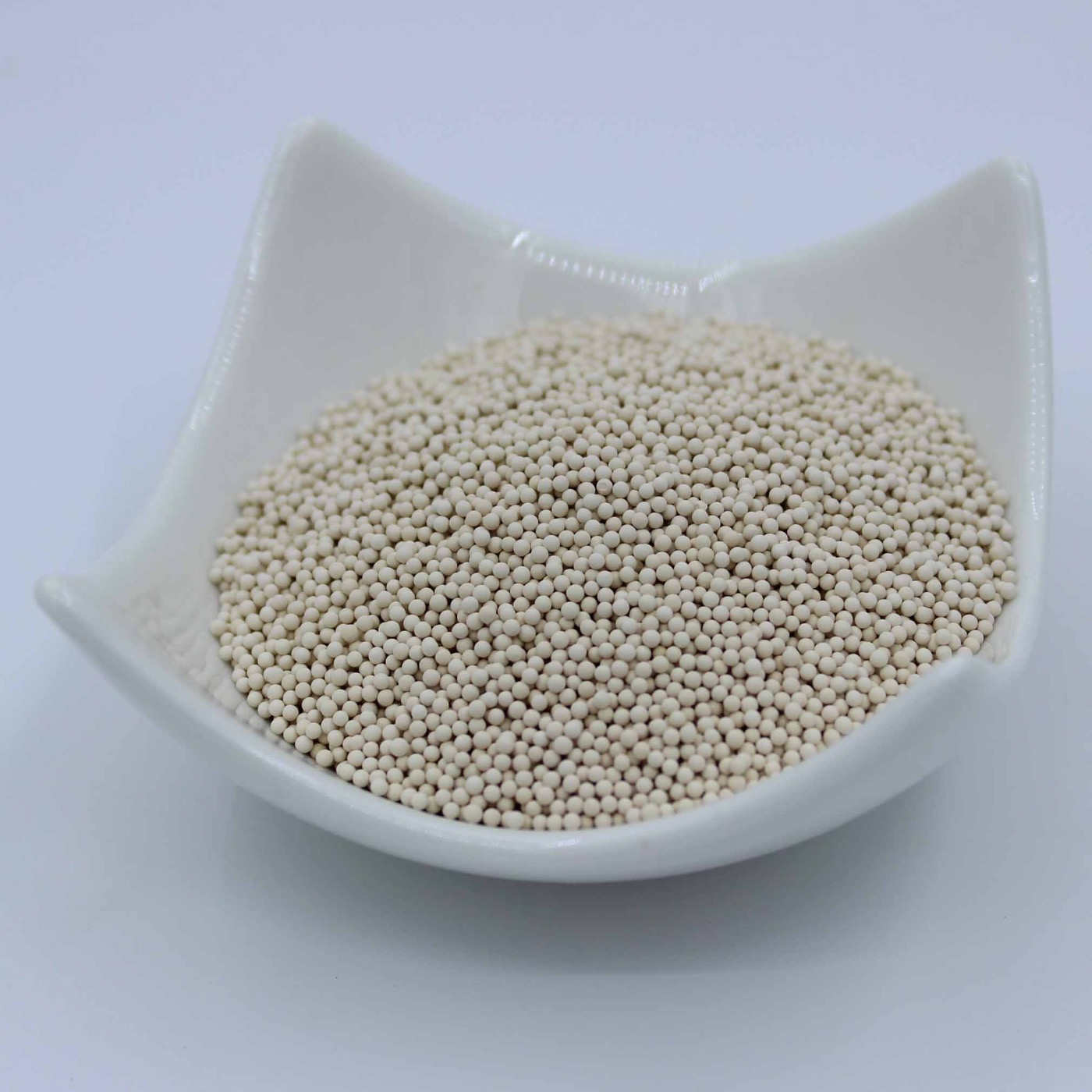
13X molecular sieve is a synthetic zeolite adsorbent with a pore opening of 10 angstroms, belonging to the NaX (Faujasite) structure family. It is the most widely used molecular sieve type for industrial gas separation, particularly in pressure swing adsorption (PSA) oxygen generation systems where it selectively adsorbs nitrogen from compressed air to produce 90-95% purity oxygen.
With a chemical composition of Na₂O·Al₂O₃·2.5SiO₂ and CAS number 63231-69-6, 13X molecular sieve combines high adsorption capacity with excellent thermal stability up to 600°C. Its 10Å pore size accommodates molecules including water (2.8Å), CO₂ (3.3Å), N₂ (3.64Å), H₂S, and mercaptans, making it versatile across dehydration, purification, and separation applications.
Market Insight: The molecular sieve product category has 1,000+ keyword variants with an average keyword difficulty of just 0.1 — indicating very low SEO competition. The oxygen molecular sieve sub-niche carries a CPC of $2.50, the highest in the industrial adsorbent market, reflecting strong commercial buyer intent.Technical Specifications
The following table presents the standard specifications for industrial-grade 13X molecular sieve:
| Parameter | Specification |
|---|---|
| CAS Number | 63231-69-6 |
| Chemical Composition | Na₂O·Al₂O₃·2.5SiO₂ |
| Pore Size | 10Å (1.0 nm) |
| Bulk Density | 0.63-0.68 g/ml |
| Crushing Strength | ≥ 45 N |
| Equilibrium Water Capacity | ≥ 28.5% |
| Regeneration Temperature | 250-300°C |
| Standard Forms | Spheres (1.6-2.5mm, 3-5mm) |
Key specification considerations for industrial buyers:
- Particle size selection: Smaller spheres (1.6-2.5mm) offer faster adsorption kinetics but higher pressure drop. Larger spheres (3-5mm) reduce pressure drop at the cost of slightly slower mass transfer. Choose based on your bed geometry and flow rate requirements.
- Bulk density tolerance: Variations in bulk density (±0.03 g/ml) are normal between production batches. For critical applications, work with your supplier to establish acceptable density ranges in the purchase specification.
- Crushing strength relevance: The ≥45 N specification ensures bed integrity under operating pressures up to 8-10 bar typical in PSA systems. Lower crushing strength leads to dusting, increased pressure drop, and premature bed replacement.
Primary Applications
1. PSA Oxygen Generation
13X molecular sieve is the standard adsorbent for PSA and VPSA oxygen generation systems. Under pressure (3-8 bar), it selectively adsorbs nitrogen from compressed air while allowing oxygen to pass through, producing 90-95% purity O₂. This application accounts for the highest commercial demand and carries the strongest buyer intent signals in the market — with the keyword “molecular sieve oxygen generator” commanding a CPC of $2.50.
Key performance factors for PSA oxygen applications:
- N₂/O₂ selectivity: 13X’s 10Å pore structure provides high nitrogen adsorption capacity at the low partial pressures typical in PSA cycles
- Working capacity: Equilibrium water capacity ≥28.5% ensures sufficient moisture removal from feed air before the N₂ separation stage
- Cycle life: With proper regeneration at 250-300°C, 13X beds typically operate for 3-5 years before replacement
[related:oxygen-generation-zeolite-molecular-sieve]
2. Compressed Air Drying
Industrial compressed air systems use 13X molecular sieve for deep drying to dew points below -40°C. The 10Å pores trap water molecules while allowing smaller gas molecules to pass. This is critical for instrumentation air, pneumatic control systems, and processes where moisture would cause freezing, corrosion, or product contamination.
3. Natural Gas Dehydration
13X molecular sieve removes water vapor from natural gas streams before pipeline transport or LNG liquefaction. Unlike silica gel desiccants, 13X maintains high adsorption capacity at elevated temperatures and does not degrade in the presence of light hydrocarbons.
[related:molecular-sieve-bed-loading-guide]
4. CO₂ Removal and Gas Purification
13X molecular sieve effectively captures CO₂ from gas mixtures and removes hydrogen sulfide (H₂S) and mercaptans from hydrocarbon streams. The large pore opening allows these relatively large molecules to access the internal adsorption sites. Applications include biogas upgrading, synthesis gas purification, and air pre-purification before cryogenic air separation.
13X vs 5A Molecular Sieve — How to Choose
For industrial buyers comparing 13X and 5A molecular sieves, the choice depends primarily on the target molecule and application:
| Parameter | 13X Molecular Sieve | 5A Molecular Sieve |
|---|---|---|
| Pore Size | 10Å | 5Å |
| Structure Type | NaX (Faujasite) | CaA (LTA) |
| Best For | N₂/O₂ separation, H₂O/CO₂ removal | n-paraffin separation, O₂/Ar separation |
| PSA Oxygen | ✓ Standard choice | ✗ Lower N₂ capacity |
| Air Drying | ✓ Excellent | ✓ Good |
| Natural Gas | ✓ H₂O + H₂S removal | ✓ H₂O removal only |
| Regeneration Temp | 250-300°C | 200-300°C |
Selection rule of thumb: If your application involves oxygen generation from air, use 13X. If your application requires separating normal paraffins from branched paraffins or separating oxygen from argon, use 5A.
For product selection support, compare your application details with the available molecular sieve categories before requesting a quotation.
Advantages and Limitations
Advantages:
- High N₂ adsorption capacity at low partial pressure — the defining characteristic that makes 13X the standard for PSA oxygen
- Thermal stability up to 600°C — tolerates regeneration and upset conditions without structural collapse
- Regenerable for hundreds of cycles without performance loss — long service life reduces total cost of ownership
- Available in multiple particle sizes — 1.6-2.5mm for fast kinetics and 3-5mm for lower pressure drop
- Proven in large-scale industrial installations — supported by decades of operational data across gas processing and air separation industries
Limitations:
- Not suitable for acidic gas environments — prolonged exposure to acidic gases (SO₂, NOₓ) can degrade the zeolite framework. If your gas stream contains acid gases, consider a guard bed upstream of the 13X bed
- Requires dry storage before use — 13X adsorbs atmospheric moisture rapidly. Once a container is opened, transfer the material to the process equipment or store under nitrogen blanket
Supplier Selection Checklist
When evaluating 13X molecular sieve suppliers for industrial procurement, verify the following:
- ISO 9001 certification — ensures consistent quality management across production batches
- REACH compliance — mandatory for European market access; verify documentation
- Particle size distribution data — request sieve analysis (not just nominal size range)
- Application-specific reference cases — ask for installations similar to your operating conditions
- Technical data sheet (TDS) availability — including CAS number, composition, and all specification parameters
- Sample availability — test a sample batch in your equipment before committing to volume orders
- Packaging options — sealed steel drums (standard), supersacks, or custom packaging
- Logistics support — verify the supplier can ship to your destination with proper moisture protection
For a detailed comparison of molecular sieve suppliers, visit our adsorbents overview page or request a quotation with your technical requirements.
Need pricing or technical support? Send your application details, target quantity, and destination country to our sales team. We provide product direction, sample coordination, and quotation follow-up for international buyers. Request a Quote →